EBOOK DOWNLOAD PDF Reporting: Immigrants Online eBook
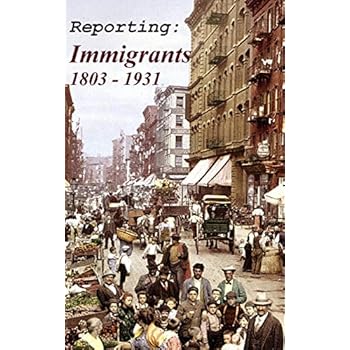
Description for Reporting: Immigrants
Outrage concerning immigrants in the United States began after independence, and probably well before 1802, the year of this collection's first article. The argument laid out in an anonymous letter to the Lancaster Intelligencer was economic: immigrants would compete for jobs and threaten the livelihoods of the citizens, whose families should enjoy the privileges that came with stepping ashore at an earlier date. It seems a self-evident argument and hard to refute, until one considers the problem of settling a continent-sized nation without immigrants to do most of the settling. By the 1840s, the debate took on new dimensions on ethnic, social and religious grounds. Catholic Irish fleeing starvation were considered of lesser benefit to the nation than good Protestant stock from northern Europe and England. The arrival of city-dwellers also raised an issue. Immigration opponents became concerned critics of the overcrowded, unhealthy conditions that resulted when immigrants remained in the ports of their arrival, rather than taking to the land.Gambling and opium brought by San Francisco's Chinese immigrants gave rise to Chinese exclusion, written into federal law in 1882. The corruption of public bureaucrats and railroad officials profiting from trade in immigrant transport and labor also made for good reads in the San Francisco Call and other papers. Various strains of anti-immigrant ideology can be further traced through newspapers of the late 19th and early 20th centuries. Dark and ominous headlines brooded over many stories of murder and gang warfare among the clannish Italians. "Is the Famous Italian 'Black Hand' Organization a Myth?" from the 1909 Los Angeles Herald treats the burning debate over the existence of a criminal underworld imported by Sicilian arrivals.The sensational revelations in the press goaded lawmakers to act: immigration laws of the 1890s and 1920s restricted new arrivals as a percentage of those already arrived from the same country. These laws were inspired by the compulsion to reset the country's social makeup to an imagined better past, well before steamship travel made the voyage to New York and other ports easy, even for the poor, for Asians, for southern Europeans. Excluding immigrants on the basis of limited wealth arrived later. The problem, as laid out in "The Problem of Immigration" from the Wilmington Morning News, and other articles of the 1920s, was simply one of cost and benefit. The poor, in this view, were naturally less desirable than the rich, on the basis that they were more likely to become a "public charge." This ignored the fact that the rich also posed their costs to the public finances--and the poor were required to pay taxes that supported them, like anybody else.The menace of undesirable political views was another major theme of immigration stories in the years after World War I. Russians in this era were associated with anarchists and Communists, and socialism provided grounds for deportation, no matter the raised lamp before the land of liberty and the promise of breathing free. The newspapers were, by and large, glad to see them go, and had little argument with the government's often-violent enforcement of patriotism and political correctness.The familiar arguments are startlingly revealed in these columns, letters and stories. Reporting: Immigration includes 36 articles, reprinted complete and unedited, as well as a timeline of US immigration laws and history, and a thorough bibliography of scholarly and popular books on the subject
Books are everywhere. Libraries big and small and bookstores are splattered all over college campuses and larger cities. They are all filled with one of the most important things of all time—books. Those who read books appreciate the multiple places to find books. Those who aren’t fans of books, don’t understand what could make readers want to obsess over books. There is a reason for their obsession, though. You hear it all the time: read every day.Reading is important because it develops our thoughts, gives us endless knowledge and lessons to read while keeping our minds active. Reading books to help us learn and understand and makes us smarter, not to mention the knowledge, vocabulary and thinking skills we develop.In the world today where information are abundant, reading books is one of the best ways to be informed. Though reading might seem like simple fun, it can be helping your body and mind without you even realising what is happening. What makes reading so important? It can be for these reasons and not just knowledge.For those who don’t enjoy it, you might change your mind after hearing about the benefits. Can something so easy and fun be so helpful in your life? Of course, it can! Reading can be a great benefit to you in many different ways—such as sharpening your mind, imagination, and writing skills. With so many advantages, it should be an everyday occurrence to read at least a little something.Books can hold and keep all kinds of information, stories, thoughts and feelings unlike anything else in this world. Can words, paragraphs, and fictional worlds be all that great for you and your health? It definitely can, and it is a timeless form of entertainment and information
Step-By Step To Download Reporting: Immigrants
- Click The Button "DOWNLOAD" Or "READ ONLINE"
- Sign UP registration to access & UNLIMITED BOOKS
- DOWNLOAD as many books as you like (personal use)
- CANCEL the membership at ANY TIME if not satisfied
- Join Over 80.000 & Happy Readers.
OR



No comments:
Post a Comment